

Open Instagram.
Scroll.
Stop.
You see a promotional poster.
Keep scrolling.
Another business has a very similar layout.
Keep scrolling.
Another one uses almost the same typography.
Another has the same kind of photograph.
Another has the same colour combination.
At some point, you might start wondering:
Have I seen this before?
Maybe you have.
Welcome to the world of template-driven design.
The Problem Isn’t That Templates Exist
Let’s get one thing out of the way.
Templates are useful.
They’re convenient.
They’re accessible.
They can help someone who has never studied design create something reasonably presentable in minutes.
For a small business owner who needs a quick announcement or social media post, that can be incredibly helpful.
The interesting problem begins when everyone starts using the same visual solutions.
The same layouts.
The same fonts.
The same stock photographs.
The same icons.
The same colour combinations.
The same spacing.
The same design trends.
And suddenly, businesses that have absolutely nothing to do with one another start looking strangely similar.
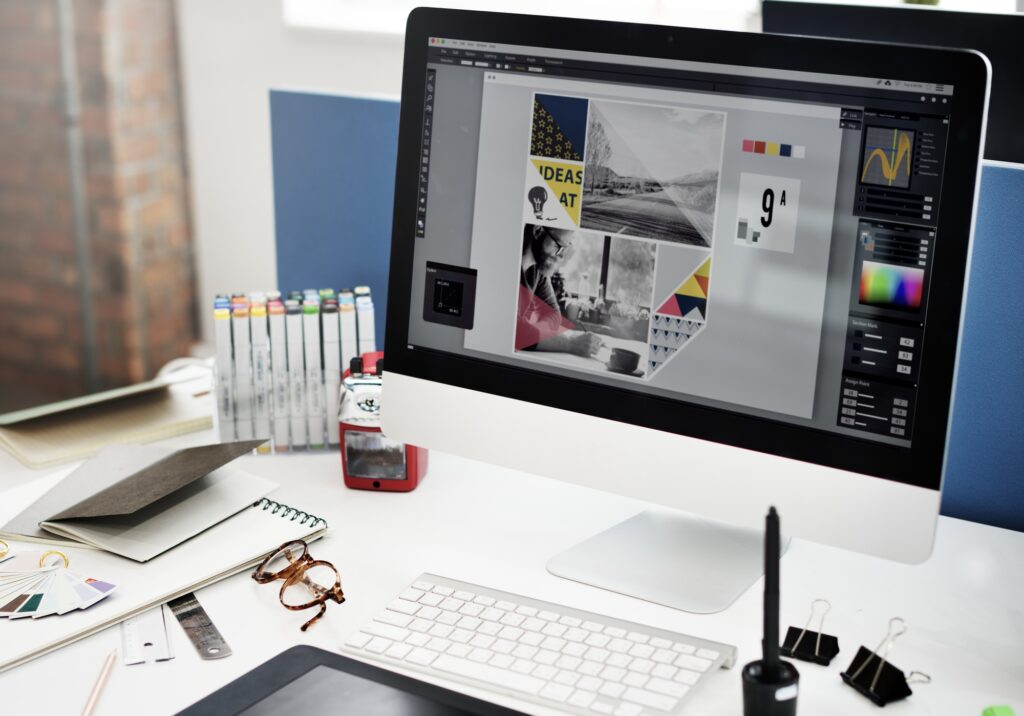
When “Professional-Looking” Becomes Predictable
This is where things get interesting.
A template can make a design look polished.
But polished doesn’t necessarily mean distinctive.
Imagine 100 businesses using the same template.
They change the logo.
They change the photograph.
They change the text.
They change the colours slightly.
Technically, they now have different designs.
Visually, however, they may still feel like variations of the same idea.
That’s because the underlying structure hasn’t changed.
The template is doing the thinking.
Your Business Isn’t a Template
This is perhaps the biggest issue.
Your business has a personality.
It has a particular audience.
It has a particular story.
It has things that make it different from the business next door.
A generic template doesn’t know any of that.
It only knows where the headline goes.
Where the photograph goes.
Where the button goes.
Where the logo goes.
And that’s perfectly fine for a template.
But your brand is not a collection of boxes waiting to be filled.
The “Canva Look”
Canva has made design accessible to millions of people.
That’s a good thing.
But accessibility comes with an interesting side effect.
When millions of people have access to the same design library, they also have access to many of the same visual ingredients.
This doesn’t mean every Canva design looks the same.
Far from it.
The platform can be used to create highly original work.
The problem is what happens when people simply select a template, replace the text and upload it without considering whether the design actually belongs to their brand.
Therefore, the software isn’t necessarily the problem
The lack of design decisions is.
The Strange Thing About Originality
Here’s the paradox.
Many people want their business to look unique.
But they also want their design to look familiar.
They want something different…
…but not too different.
They want to stand out…
…while using the same styles everyone else is using.
That’s where thoughtful design becomes important.
Originality doesn’t necessarily mean creating something nobody has ever seen before.
It can mean making a combination of familiar elements feel unmistakably yours.
Your typography.
Your colour system.
Your imagery.
Your layouts.
Your tone.
Your visual details.
The combination can become distinctive.
What Makes a Design Feel Like “You”?
Imagine removing your business name from your social media posts.
Could someone still recognise them?
Maybe because of your colours.
Maybe because of your typography.
Maybe because of your photography.
Maybe because your layouts have a particular rhythm.
Maybe because your illustrations have a recognisable style.
That’s when your design starts doing something more interesting than simply looking good.
It starts building recognition.
Templates Are Starting Points, Not Always Destinations
There is absolutely nothing wrong with beginning with a template.
The question is what you do next.
Do you simply replace the words?
Or do you ask:
Does this actually represent my business?
Can the layout be changed?
Does the typography fit the brand?
Are the colours appropriate?
Does the imagery make sense?
Can the composition be improved?
Can unnecessary elements be removed?
Can something distinctive be introduced?
That’s the difference between using a template and using design thinking.
The Danger of the “Looks Fine” Test
A lot of DIY designs pass one very simple test:
“Does it look okay?”
And that’s where the conversation often ends.
But “okay” is a very low standard.
A better set of questions might be:
Does it look like my business?
Would my audience recognise it?
Does it communicate the right feeling?
Is the most important information obvious?
Does it look different from my competitors?
Will it still look relevant six months from now?
Now you’re thinking about design rather than decoration.
Sometimes the Best Design Decision Is to Remove the Template
There comes a point where the template starts dictating the design instead of supporting it.
Maybe the headline doesn’t need to be there.
Maybe the photograph doesn’t need to occupy half the page.
Maybe the business doesn’t need five different colours.
Maybe the layout should be completely different.
Maybe the best solution doesn’t exist in a template library.
That’s where custom design can become valuable.
Not because templates are bad.
But because sometimes your message needs something built around your specific problem rather than adapted from someone else’s.
Free Can Be Useful. Generic Is the Real Problem.
This isn’t an argument against free design tools.
Use them.
Experiment with them.
Learn from them.
They’re fantastic resources.
However, don’t confuse free with finished.
The real cost of a generic design isn’t necessarily the money you didn’t spend.
It can be the opportunity to make your business more recognisable.
Because when every business uses the same visual language, standing out becomes much harder.
Your Brand Deserves More Than a Template
A template can give you a layout.
It can’t know your story.
It can’t understand your customers.
It can’t know what makes your business different.
It can give you the ingredients.
What you do with those ingredients is where the design begins.
So the next time you download a free template, don’t immediately ask:
“How quickly can I edit this?”
Ask:
“How can I make this unmistakably mine?”
Because the goal of design isn’t simply to look good.
And it certainly isn’t to look like everyone else.
It’s to be recognised.